



I got a big head, but it’s not THAT big! (more…)
Category: My Artistic Endeavors
My journey deeper into photography, art-making, filmmaking. Practiciing the craft that makes my creative juices flow.
-
Saelee Deus Ex Machine (SDXM): A 2D Game Engine Features List
I’m getting a steady 33 frames per second and have tested on Windows XP, Vista, and 7! If you have Vista or Windows 7, you’ll be good to go. If you have Windows XP or previous versions of Windows, you might have to get the .Net Framework to run my application. Anyway, here’s a list of features I’m planning on implementing. (more…)
-
Code Problem Solved: How to Implement z-order Rendering
If you’ve dealt with cascading style sheets (CSS) in web design, then you might be aware of z-index (also known as z-order). This special attribute tells the web browser to render elements in a certain order. But specifically in webpages, a z-index can range from 0 to 99, where 0 is the farthest back element (it is rendered first) and 99 is the front most element (it is rendered last). All is well when the software’s already working for you, but what about in game development? Here’s a way… (more…)
-
Pen Tonic Comics: The Real Batman/Alfred Dynamic
“Aaaaalllllllfred! Aaaaalllllllfred! Allllllfrred!” (more…)
-
Blame it on the algo-algo-algorithms: Basic Math Equations to use in 2D game development
3D game development gets into another dimension of complexity, literally. But sometimes simple is better. Let’s see some simple math equations and structures used in 2D game development. (more…)
-
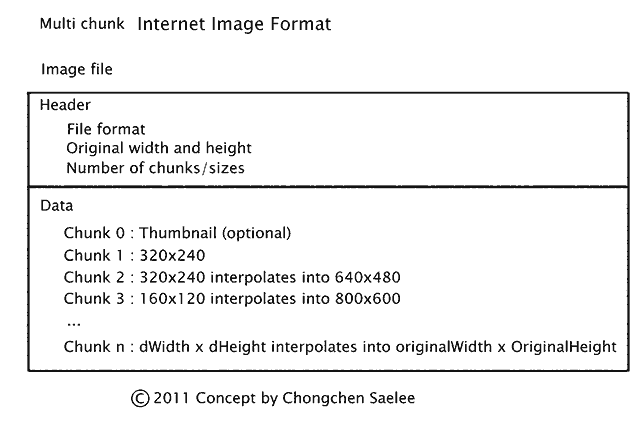
More efficient Internet Image Format
JPEG is king. For now. But Google’s got their WebP image format. Microsoft’s got their JPEG-XR. BUT, as images get more high-rez, and users become less patient with downloading more content at high speeds (although higher bandwidth is becoming more household and hopefully more affordable), what needs to be done with the Internet “image” in order to make it a little more efficient? (more…)
-
Custom Font Javascript + CSS Implementation
Copyright © 2011 By Chongchen Saelee
There’s only a handful of “websafe” fonts, a collection of fonts that any Internet user’s computer will most likely already have preloaded whether with their operating system or Internet browser. So when a webpage designer is feeling limited with his font selection, he either has to rasterize that custom font into an image or force the user to download the custom font. If the user has to download a custom font, it’s never a gaurantee that it will be compatible as there are many formats of fonts. Even with rasterized fonts as images, depending on how much text needs to be shown, the graphic might get really big and weigh down the downloading speed or drawing performance.
The most efficient method is probably to create a real font using a font editor and hope it works on the user’s end. But font editors cost money, and if you’re not a hardcore typographer, what’s the point of investing in it? So I’m going to attempt to create a “free” solution: implement a simple javascript font system based on a sprite sheet. This is a technique commonly used in game development and I’m sure others out there have done similar thing.